Best Selling Replica Rolex Watches UK Explorer Guide

The Rolex Explorer is in many ways the quintessential dressy tool replica watches UK from Rolex’s Oyster Perpetual collection — less flashy than the GMT-Master, less bulky than the Submariner, while still rooted, like those two models, in a history of adventure and discovery. While it has changed very little since the 1950s, today’s Rolex Explorer is the culmination of many decades of aesthetic and technical evolution, guided by a watchmaker for whom the subtlest details make all the difference in the world to its avid legions of fans.
Underpinning the Explorer: Oyster Case and Perpetual Caliber
The Rolex Explorer, like all Oyster Perpetual timepieces in Rolex’s Professional collection, is an expression of two technical milestones that Rolex and its visionary founder Hans Wisdorf contributed to watchmaking history. The first is the so-called Oyster case, developed in 1926, which revolutionized the construction of watch cases with its dustproof, waterproof, hermetically sealed structure, secured by a threaded caseback and a crown that screwed tightly into the case. In 1931, Rolex made history again with the creation of its first “Perpetual” movement (below), whose self-winding mechanism was driven by an oscillating rotor.
The marriage of these two inventions gave rise to the “Oyster Perpetual” line of timepieces that remain at the heart of Rolex’s collection today, beginning with the Datejust in 1945 and coming to full fruition with the tool-oriented, yet still luxurious, Professional models that emerged in the early 1950s: the deep-sea-diving Submariner, the travel-ready GMT-Master, and the watch that is perhaps the most effortlessly stylish in its utilitarian design, the mountaineering-driven Explorer — 1:1 replica Rolex watches that has changed in only the subtlest of ways since it came to the world’s attention in 1953 after playing a key role in that year’s historic expedition to Mount Everest.

1953: Rolex Conquers Everest
The Rolex Explorer’s ascension to the top of Everest, and its subsequent mainstream popularity, began in earnest in the 1940s, with the 5020 series of watches. Bearing the Italian nickname “Ovettone,” which roughly translates to “big egg,” these watches’ monobloc Oyster cases were not only larger than usual for the time (36mm, at a time when most men’s watches, including those from Rolex, averaged 32mm to 33mm), but also notable for their largely domed casebacks and crystals. The 6098 series of Ovettones followed and in most respects superseded the 5098 models, adding the newly designed Super Oyster Crown, which didn’t screw down into the case but simply pushed in, as it would in a dress watch; and the automatic (i.e., Perpetual) A296 movement. The movement was chronometer-rated and also quite thick, which necessitated the bulging “bubbleback” case design. It is the 6098 models, and their successors in the 6298 series, with three-part cases replacing the monobloc ones, that are today considered the prototypes for the modern Rolex Explorer.
1953 – 1963: An Era of Milestones
Fast forward to the seminal year of 1953 — which saw Rolex unveil the first Submariner, the Turn-o-Graph that would one year later evolve into the GMT-Master, and the first generation of the Rolex Explorer. It was also, as alluded to previously, the year of Sir Edmund Hillary and Tenzing Norgay’s historical expedition to the summit of Mount Everest on May 29, led by Colonel John Hunt for Great Britain. Rolex, as well as a now-mostly-forgotten British watchmaker called Smiths, provided watches for the expedition. The Rolex model was the “pre-Explorer” Ref. 6098, equipped with the automatic Caliber A296; the AAA Rolex replica watches that Rolex provided to Hillary, which was never produced commercially, now resides in Zurich’s Beyer Watch & Clock Museum. After the historic feat, which was completed just in time for the British media to proudly report it on the morning of Queen Elizabeth II’s coronation on June 2, 1953, Rolex predictably touted it in advertisements for the mountaineering-themed timepiece that it released that year, Ref. 6350, the first Rolex watch with “Explorer” on the dial. (Rolex, in fact, had already established a bit of history in this area: the company had previously provided watches to the pilots who made the first expedition flight over Mount Everest in 1933, and ran contemporary ads calling attention to it.)
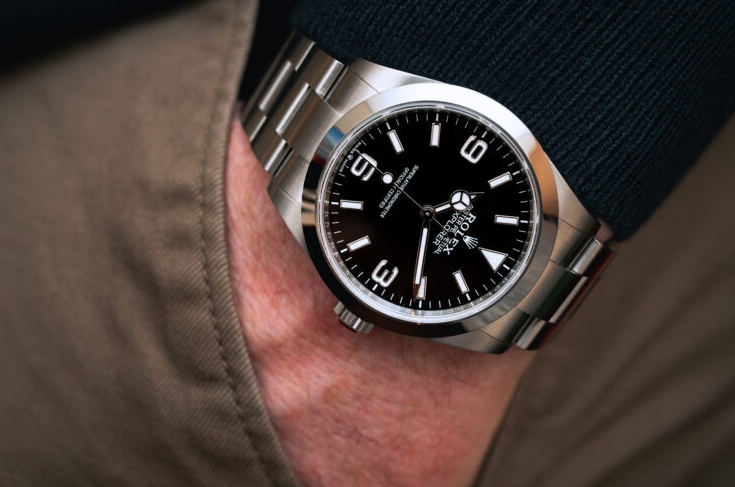
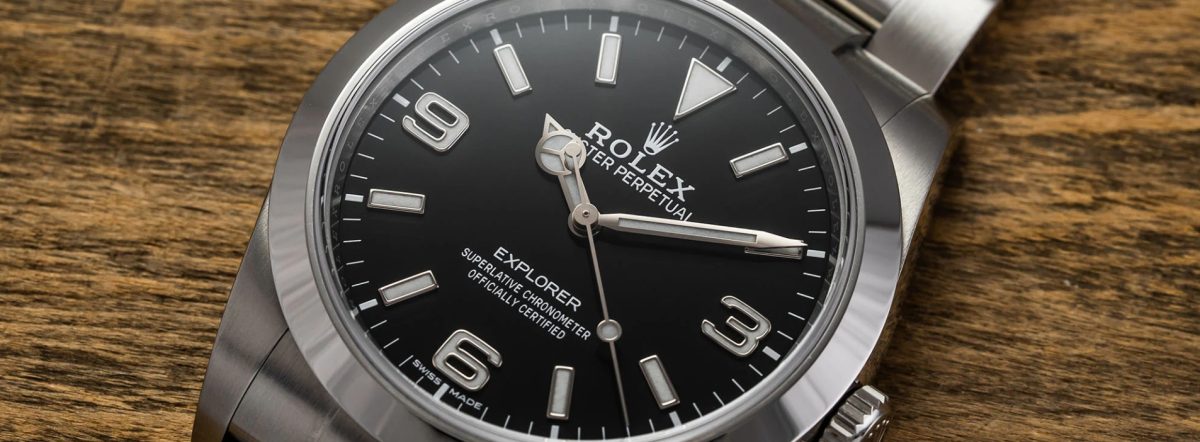
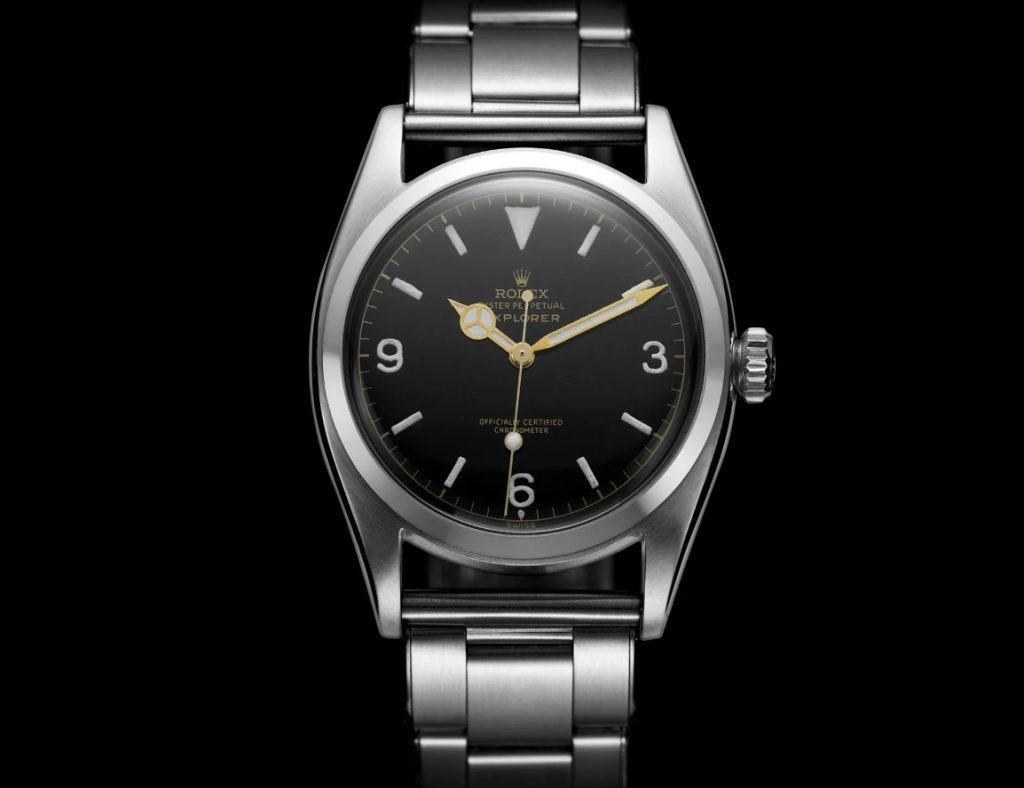
The evolution of the Explorer can be traced in a fairly straight line, from the “Ovettone” 5098 and 6098 models, to the 6150, and ultimately to the 6350, widely regarded as the first “official” Explorer, aka Explorer I (below). The 6150 establishes what has come to be known as the “Explorer” dial layout: inverted triangle at 12 o’clock, numerals at 3, 6, and 9 o’clock, and bar indexes at the other hour positions. Its steel case measured 36mm, like those of the best fake Rolex watches carried on the Everest expedition. The dial featured the now-familiar Mercedes hour hand and pencil-shaped minute hand and, on the majority of models, featured the word “Precision” above 6 o’clock; a relatively small number of models in this series had “Explorer” in this spot instead. The immediate successor to the 6150, the 6350, is distinguished not only by its adoption of this verbiage on the dial but also by the chronometer certification of its movement, which was the same Caliber A296 inside the 6150 mode but finely adjusted to greater precision. The Explorer Ref. 6350 was available with several dial iterations and handsets, including Mercedes, pencil, and syringe-style hands, and the now very rare and collectible “honeycomb” textured dial.

Rolex Explorer I (1953)Rolex trotted out a new in-house Perpetual movement, Caliber 1030, in 1956, installing it in the next generation of the Explorer, Ref. 6610. The thinness of the new movement compared to its predecessor allowed for the watch case — still 36mm in diameter — to also be slimmed down, allowing the Explorer to move on from the “bubbleback” look of its antecedents. This reference, which ushered in Mercedes hands and gilt dials (aka black with gold text) more or less permanently to the series, was produced only until 1959, and examples today are quite rare and valuable. The successor to that model, by contrast, proved to be the version of the Explorer with the most longevity — as well as one of the longest-running sports watch models, period.
1963 – 1989: The Explorer’s Longest Trek
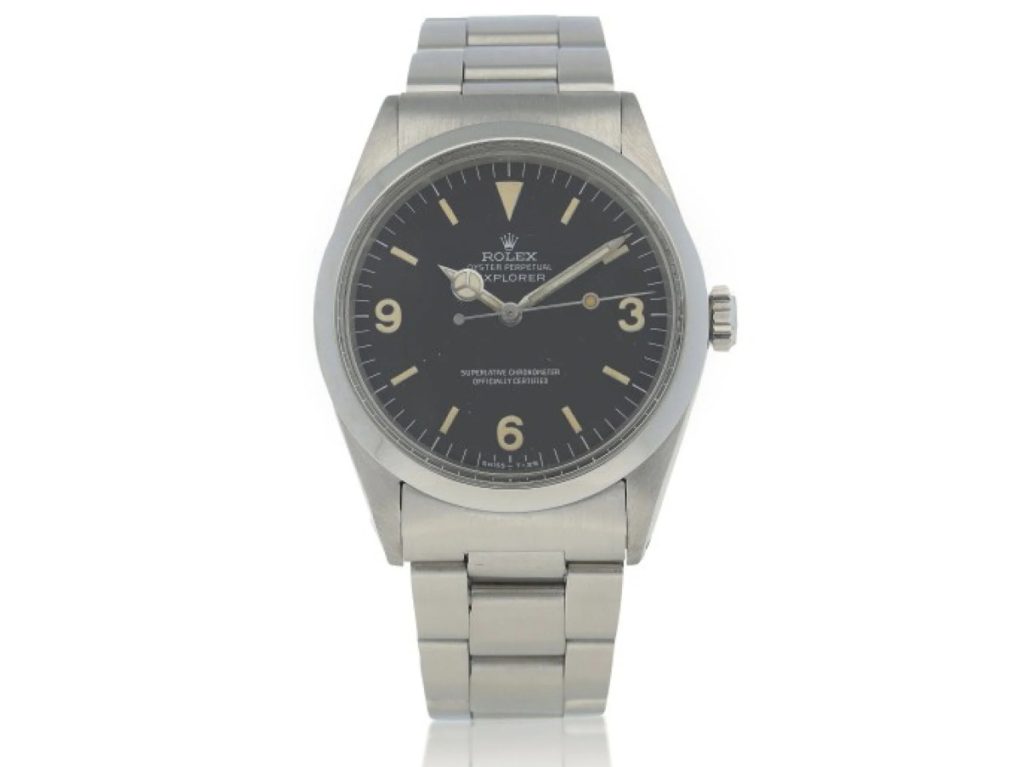
The Explorer Ref. 1016, launched in 1963 and continuously produced until 1989, is what most Rolexophiles envision today as the classic Explorer I. Like its predecessor, it marked the debut of another new Rolex movement, the automatic Caliber 1650, a chronometer-rated mainstay of that era’s Oyster Perpetual watches. It was also the first iteration of the Explorer to bear the lofty and now familiar inscription “Superlative Chronometer Officially Certified” on its dial, and was the first one whose Oyster case offered 100 meters of water resistance. As is its wont, Rolex tweaked and updated the Ref. 1016 over its ensuing years in production: Caliber 1560 gave way to the successor Caliber 1570, which added a hacking seconds function, and the radium-based luminous paint on the dials was discontinued in favor of a less-radioactive tritium-based substance (a transition which was, of course, taking place throughout the watchmaking industry as a whole at the time).

The Explorer Ref. 1016 won over many enthusiasts in its decades of uninterrupted production, and is even considered by many purists to be the “real” James Bond watch — rather than the Rolex Submariner worn by Sean Connery in the early Bond movies, which usually bears that distinction. As I explore in some detail here, 007’s creator Ian Fleming (above) wore an Explorer I and somewhat obliquely referred to some of its attributes when describing Bond’s watches in his novels.

[At this point you may be wondering, why refer to this three-handed, chronometer version of the Explorer as the “Explorer I” at all? Quite simply, because Rolex decided to release, in 1971, another version of the cheap fake Rolex watches that included a GMT function. I’ll delve into this watch, which remains in the modern collection as the Explorer II, and certainly merits its own deep dive — or should that be “steep climb?”— in a future article.)
1989 – 2010: Luxury Enhancements, Technical Advancements
Rolex Explorer I – 1989

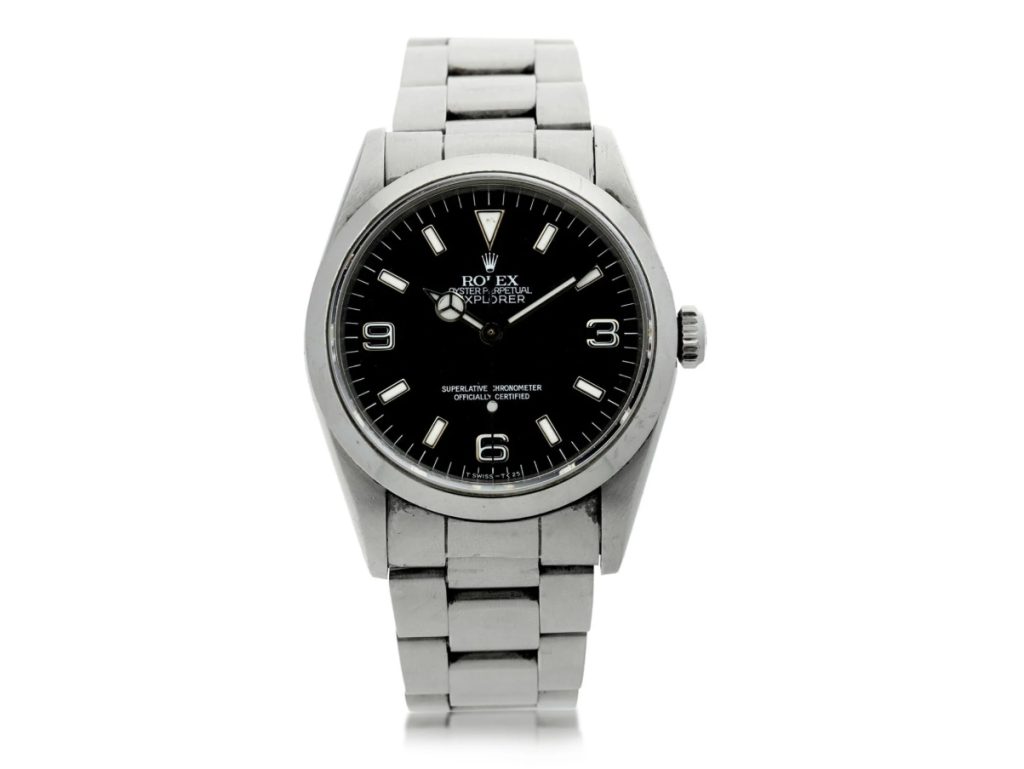
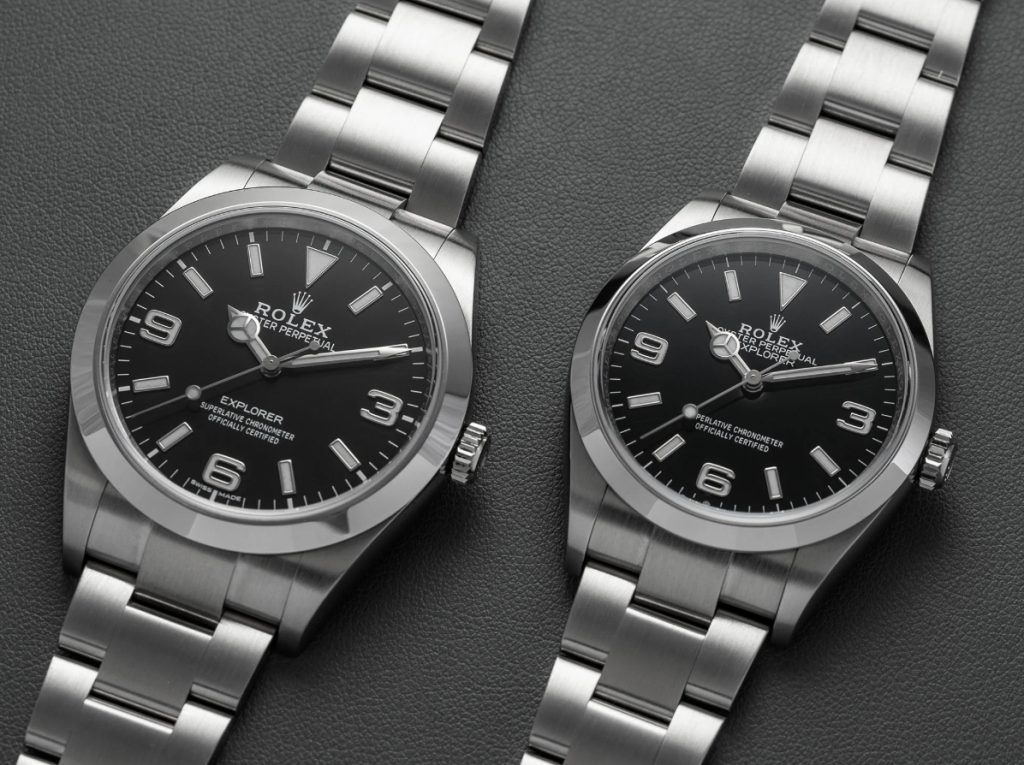
The long run of the Explorer Ref. 1016 finally reached the finish line in 1989, as it was phased out to make way for the new Ref. 14270, still at 36mm in steel, now with a sapphire crystal rather than the acrylic one of previous generations, and with Super-LumiNova eventually displacing tritium on the dial’s hands and markers for illumination (both upgrades were industry-wide trends). Other substantial upgrades included the white gold, applied hour numerals (still in the well-established 3, 6, and 9 layout), which replaced the previous painted ones, and another new automatic, in-house movement, Rolex Caliber 3000, with an optimized frequency of 28,800 vph. (The subsequent and virtually identical Ref. 114270, launched in 2001, differed mainly in its use of Caliber 3130, whose upgrades included a larger balance wheel, a balance bridge replacing a balance cock, and a flat hairspring with a Breguet overcoil.) The glossy black dial replaced the matte versions found on late 1990s models of the Explorer. In some of the earliest 14270 Explorers, Rolex filled the applied numerals with black lacquer rather than luminous paint, before customer dissatisfaction moved the company to discontinue this practice; these “Black Out” Explorer models are among the rarest modern Rolexes out there today.

2010 – 2021: Exploring an Expansion
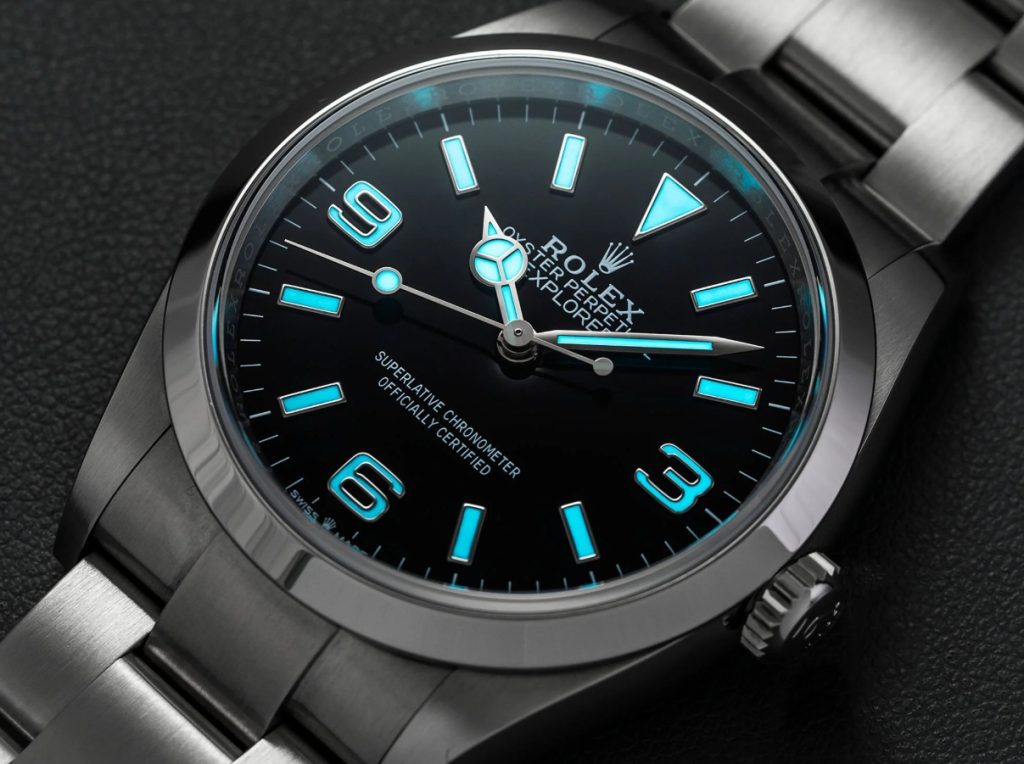
Rolex Explorer dial ChromalightRolex is legendary not only for its longstanding capacity to set perfect copy Rolex watches industry trends but also, perhaps even moreso, for its steadfast refusal to follow them. Its watches — the Explorer being a prime example — still look essentially the same in the second decade of the 21st Century as they did in the middle of the 20th. But the industry-wide movement toward “bigger is better” proved to be too widespread for even mighty Rolex to ignore. In 2010, the Explorer, considered a large watch when it debuted at 36mm in 1953, was the dwarf of Rolex’s men’s lineup in 2010. Hence the launch of the Explorer Ref. 214270 at that year’s Baselworld watch fair, which featured an expended 39mm case, a new movement (automatic Caliber 3132, which added a new shock-absorbing system and Rolex’s blue Parachrom hairspring), and initially, no lume on the applied numerals; the latter was rectified in the “Mark 2” models rolled out in 2016, which also had lengthened hands to better fit the wider dial dimensions. This generation of the Explorer I was also the first to incorporate Rolex’s proprietary, blue-glowing Chromalight luminous material on the dial’s hands and markers in place of standard Super-LumiNova.
2021: Something Gold, Something New
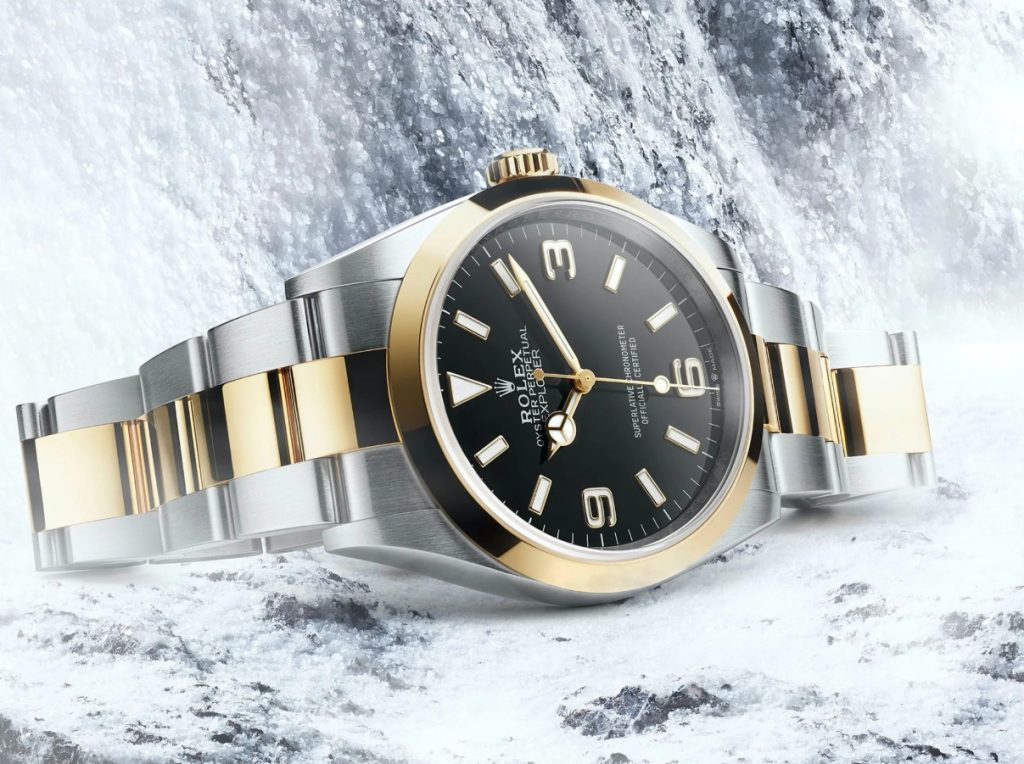
Rolex Explorer I in RolesorBy 2021, watch-world trends had shifted again, back toward more modest dimensions and a return to vintage looks overall. Rolex didn’t have to look very far to find Swiss clone Rolex watches in its lineup that would fit the bill, and one that wouldn’t even require any major overhauls design-wise. The Explorer I Ref. 124270, released during that year’s virtual Watches & Wonders exhibition, not only returned the Explorer I to its classic 1953 proportions (at the same time upgrading the movement inside yet again, to automatic Caliber 3230, Rolex’s most optimized movement to date in terms of precision, magnetic resistance and power reserve); it also was the first Explorer model to be offered not only in the standard 316L “Oystersteel” but also in a bicolor, steel-and-gold version (above) that Rolex calls “Rolesor.” The 36mm, 100-meter water resistant case is paired with an 18k yellow gold bezel and crown; yellow gold is also used for the center links of the Oyster bracelet, whose outer links are made of steel. The gold numerals and markers are filled with Chromalight and the black dial is now lacquered. The dial’s now-familiar “Superlative Chronometer” claim is backed up by the movement, which has been tested to an industry-leading rate tolerance of +2/-2 seconds per day. (For a comparison of the 36mm and 39mm versions of the Explorer, pictured side by side below, click here.)

Rolex produces only two versions of the Explorer I in its current collection, in addition to two versions of the GMT-equipped Explorer II — the Rolesor model and the all-steel version, both at the “back-to-basics” 36mm case dimensions. With demand for nearly all of its best selling Rolex replica watches at historic levels, expect Rolex to explore additional variations on one of its most storied and long-running model series in the years ahead.
Hands-On: Best UK Replica Rolex Explorer 40 Watches Reference 224270

Two years ago, when the Rolex Explorer returned to its classic 36mm case size, the previous 39mm model, which had been in production since 2010, was discontinued altogether. While many collectors were thrilled to see the change, there were others who felt that the new 36mm model was a bit too small, especially compared to the other models in the brand’s current catalog. Consequently, when the Rolex Explorer 40 reference 224270 was announced earlier this year at Watches & Wonders Geneva 2023, the addition of a larger Explorer model made a lot of sense, and while the new 40mm version is very much the larger version of the existing 36mm reference, that is also exactly the intended purpose of this new oversized China replica Rolex Explorer watches.Two years ago, when the Rolex Explorer returned to its classic 36mm case size, the previous 39mm model, which had been in production since 2010, was discontinued altogether. While many collectors were thrilled to see the change, there were others who felt that the new 36mm model was a bit too small, especially compared to the other models in the brand’s current catalog. Consequently, when the Rolex Explorer 40 reference 224270 was announced earlier this year at Watches & Wonders Geneva 2023, the addition of a larger Explorer model made a lot of sense, and while the new 40mm version is very much the larger version of the existing 36mm reference, that is also exactly the intended purpose of this new oversized Explorer watch.

Before we get into the details of the design and case sizing, it’s worth briefly discussing the remarkable design constraints of the classic stainless steel replica Rolex Explorer watches for sale. For starters, the model is defined by its signature time-only dial with prominent 3-6-9 Arabic numeral markers, which has only ever been black (unless you count the mega-rare “Albino” vintage models). Additionally, with a simple round case, a smooth bezel, and a flat three-link Oyster bracelet, there isn’t all that much that Rolex can do to the Explorer from a design standpoint without fundamentally altering one of its most famous and recognizable models.

Therefore, ever since the Explorer first appeared in 1953, Rolex has essentially been making the same replica watches UK over and over again, and with each new generation, the brand is simply trying to make it better than the previous one. That said, the fact that Rolex is now offering the new 40mm version of the Explorer ref. 224270 alongside the 36mm ref. 124270 is significant because it is the only Rolex sports model, other than the Yacht-Master, that is available in more than one case size. Only within the world of Rolex is a new size of an existing model considered big news, although it still represents one of the most significant updates to the Explorer collection in the seventy years that it has been in continuous production.

Part of why the current Rolex Explorer 36 feels small is because the watch actually is slightly smaller than previous 36mm Explorer references. Aside from the fact that the case measures closer to 35.5mm, previous versions of the 36mm Rolex Explorer had their lugs set 20mm apart, while the current model reduces this distance down to 19mm. The smaller lug width means a more dramatic taper on the lugs themselves, which results in a further visual reduction in overall size. On top of that, since the bracelet is also thinner, the entire watch simply takes up less surface area on your wrist, and if you were wondering why the current Explorer 36 feels smaller than the Datejust 36 or Oyster Perpetual 36, it is simply because the AAA replica Rolex watches actually are smaller than its similarly sized 36mm siblings.

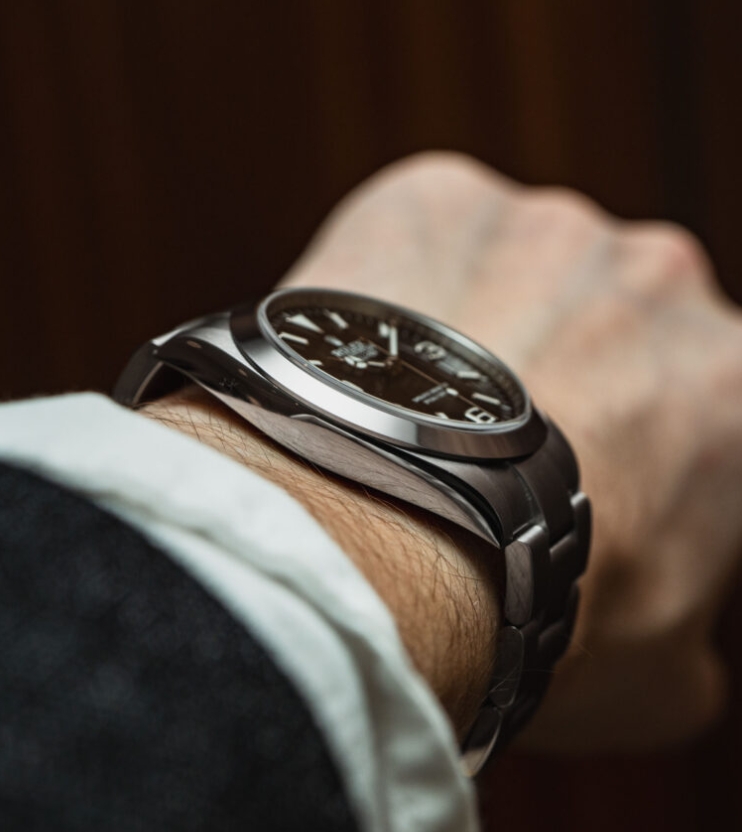
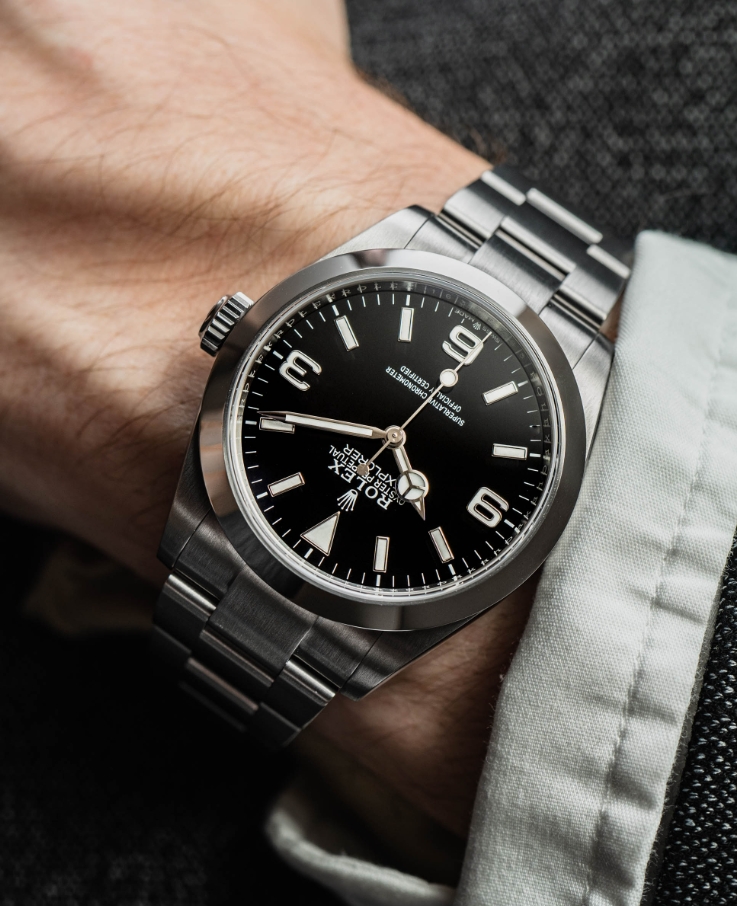
As someone with small wrists, I personally enjoy the current Rolex Explorer 36 quite a bit, but even I must admit that it is near the lower size limit for the standard version of this particular watch. For anyone with significantly larger wrists than mine, I can completely understand the sentiment that the current 36mm Explorer is a bit too small. With slightly more refined proportions than the previous 39mm generation, the new Rolex Explorer 40 reference 224270 doesn’t feel all that much larger than its plus-sized predecessor, and it is the perfect option for anyone who loves the current Explorer 36, but simply wishes that it was a little bit bigger.


Crafted from Oystersteel (Rolex’s name for its own blend of 904L stainless steel), the case of the new Rolex Explorer 40 reference 224270 measures 40mm in diameter by 11.6mm thick, which makes it the same height as its 36mm sibling. However, the larger diameter of the new 40mm version contributes to the 1:1 Rolex replica watches feeling slightly flatter once you have it in your hands and try it on your wrist. The rest of the Explorer 40 holds no real surprises or departures from the current 36mm model, and a flat sapphire crystal with anti-reflective treatment sits above the dial, while a solid, unadorned screw-down caseback closes up the reverse side of the watch. Similarly, like all previous Explorer references from the last several decades, at the 3 o’clock location, you will find a Rolex Twinlock winding crown, which has also seen an increase in size to match the larger case diameter, and it screws down to help ensure the model’s 100 meters of water resistance.

Finishing on the new Rolex Explorer 40 reference 224270 is as you would expect from Rolex: exceptionally good and tidy, but nothing so mind-blowing or elaborate that it deserves special mention — and that is perfectly acceptable as far as I’m concerned. Yes, Rolex is a luxury brand, but it’s also important to remember that Rolex produces over a million watches each year, and the Explorer 40 is one of its entry-level sports models. Calling best Rolex fake watches mass-produced feel like it belittles the enormous amount of research and engineering that goes into them, although the statement itself isn’t entirely inaccurate. They might be some of the most perfectly executed mass-produced items on this planet, but Rolex is the single most famous luxury brand in the world, and its watches, although truly excellent, are an entirely different animal compared to the small-batch handmade offerings that are produced by other brands.

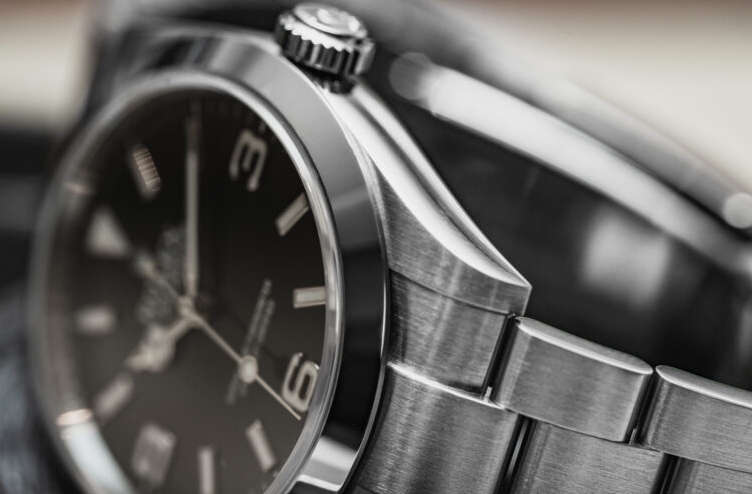
For those who don’t have experience with Rolex’s current generation of models, one quick note should be made about the bezel of the new Rolex Explorer 40 reference 224270, or rather the area of its case that sits directly under the bezel. On previous generations of top fake Rolex watches, the side of the case stuck out to the outer rim of the bezel to create a flat vertical wall (like most watches). However, the fixed bezel models from Rolex’s current lineup now have their cases milled out so that the bezel hangs over the side of the case at the area between the lugs. Consequently, the end links of the bracelet now feature protrusions that slot into the milled-out sides of the case, and this small redesign comes with two benefits and one potential drawback. On the positive side, the end links are now much better supported, which will mean less long-term wear on the sides of the case and a longer life for the bracelet itself. Additionally, since the bezel sticks out past the edge of the end links, the bracelet offers a more integrated overall appearance, and this is about as “integrated” as it gets, while still retaining a traditional bracelet that can be removed and swapped out for a compatible third-party strap.

The only potential drawback with this bezel/case design is that if you do choose to fit the new Rolex Explorer 40 reference 224270 with a standard aftermarket strap, the cut-away sections for the end links will be left open on the sides of the case. While these gaps will be partially obscured by the ends of the strap and the bezel, these spaces will likely become a collection point for dirt and grime unless the strap has ends that are specifically molded to the shape of the Explorer 40’s case. To complement its larger diameter, the lugs of the new 40mm Explorer 224270 are set 21mm apart, and while this does slightly limit the number of available strap options (compared to either 20mm or 22mm), this is the same lug width that you will find on many of Rolex’s other current-production models, such as the Submariner and Datejust 41.

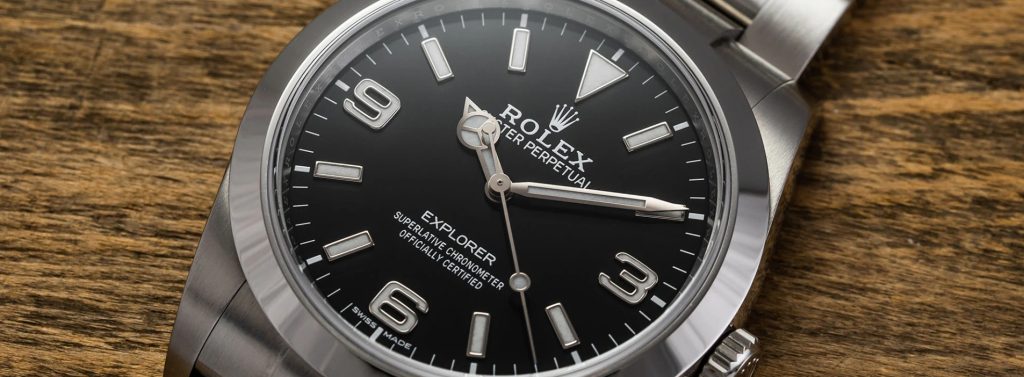
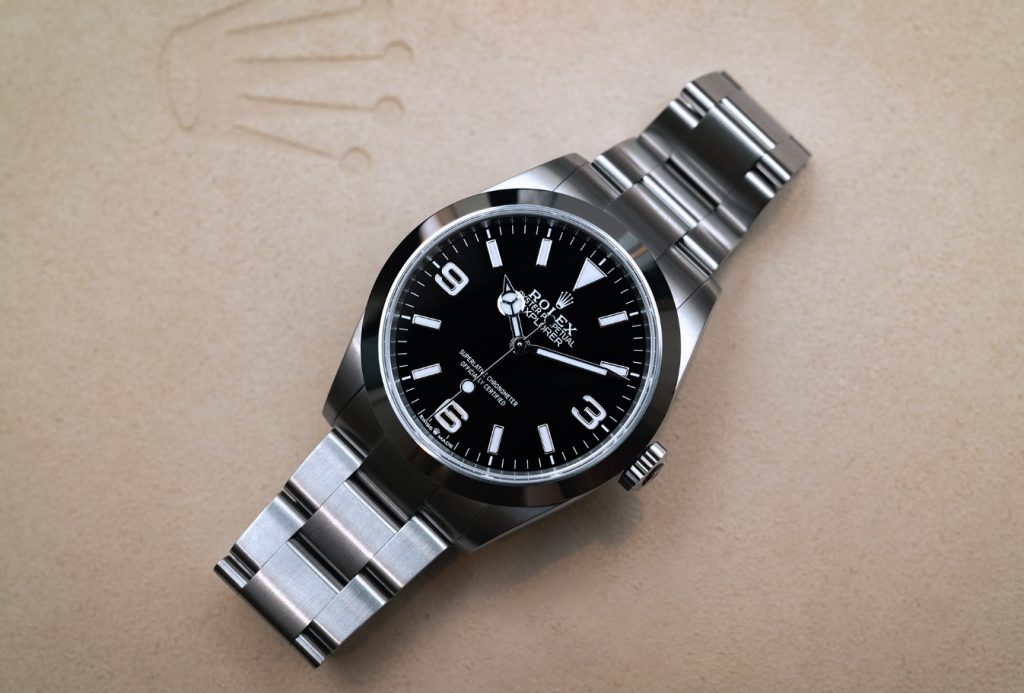
The dial of the new Rolex Explorer 40 reference 224270 is very much just a larger version of what you will find on the current-production 36mm model, which itself is essentially the latest refinement of a style that Rolex has been using since the 1950s. Set against a jet-black surface are applied hour markers crafted from 18k white gold in the Explorer’s signature 3-6-9 layout, and as you would expect, all twelve of the indexes are filled with Rolex’s blue-glowing Chromalight luminescent material. The entirety of the printing appears in white for maximum contrast, and unlike the previous 39mm model, the “Swiss Made” signature below the 6 o’clock marker features Rolex’s coronet insignia placed between the two words. Similarly, the hands appear in the model’s signature “Mercedes” style, and like the hour markers, they are crafted from 18k white gold and filled with blue-glowing Chromalight.

Internally, the new 1:1 quality replica Rolex Explorer 40 reference 224270 watches are powered by the same Caliber 3230 automatic movement that can be found inside the smaller 36mm model from the current collection. As the no-date version of the brand’s standard three-handed movement, the Rolex Cal. 3230 is a “Superlative Chronometer” rated to -2/+2 seconds per day (after casing), and it runs at a frequency of 28,800vph (4 Hz) while offering users a power reserve of approximately 70 hours. As with all of the other movements from this latest generation, the Cal. 3230 features the brand’s blue Parachrom hairspring, Paraflex shock absorbers, and a bearing-mounted monobloc rotor that offers bidirectional winding via a set of reversing wheels. Given that the Caliber 3230 is essentially the no-date version of the Caliber 3235, which Rolex trusts to power a number of incredibly popular models such as the Datejust and Submariner, the movement offers a relatively proven design, along with an extended power reserve compared to the previous generation.

Fitted to the 21mm lugs of the new Rolex Explorer 40 reference 224270 is the current generation of Rolex’s signature Oyster bracelet. Often imitated, but never quite replicated to the same level of execution, the flat three-link design of the Oyster bracelet is arguably the single most common bracelet style within the entire perfect copy Rolex watches industry, and it is the go-to option for the vast majority of Rolex’s sports models. Crafted from Oystersteel to match the case, the bracelet features completely brushed top surfaces with high-polished sides, and it is paired with the brand’s Oysterlock clasp that features an additional safety latch that folds over the top section. Although you don’t get the Glidelock extension system that can be found on other models, such as the Submariner or Sea-Dweller, the Explorer 40’s clasp does include Rolex’s Easylink extension system, which is a fold-out link that allows users to instantaneously either expand or contract the length of the bracelet by 5mm without the use of any tools.

The new Rolex Explorer 40 fills a much-requested place in Rolex’s catalog, and the addition of this new larger model represents a significant milestone for the Explorer collection, as it is now only one of two instances where Rolex offers one of its sports watches with multiple case sizes. That said, like virtually all best selling fake Rolex watches, the Explorer 40 is quite a bit more expensive than what Rolex was charging for its direct predecessors a handful of years ago. Across the board, Rolex has made significant increases to its retail prices over the past several years, but due to the massive secondary market premiums that accompany most models, the higher retail prices still seem fairly reasonable by comparison. Simply put, if people are faced with a 50% premium on the secondary market, it’s fairly easy for them to overlook a 20% price increase at a retail level, especially if they aren’t able to secure an allocation and would be forced to pay the open market price for the Rolex model of their choice anyway.

The new Rolex Explorer 40 reference 224270 is accompanied by an official retail price of $7,700 USD, which is objectively rather expensive for a time-only stainless steel sports watch; however, this also seems fairly reasonable compared to today’s gray market Rolex prices. While the actual price premium of the new Explorer 40 is just $450 compared to its smaller 36mm sibling, a more telling comparison is what this same sum could have purchased from Rolex just a handful of years ago. The previous 39mm Explorer cost $6,550 several years back, and the no-date Submariner, which is a more advanced model with three times the depth rating and a ceramic bezel, was priced at $7,500. The Explorer has always been the most simple no-frills option among Rolex’s sports watches, although its current pricing makes it very much a luxury item, despite still offering much of the same core design. That said, if you separate the high quality clone Rolex watches from their monetary value, the Rolex Explorer is still the same highly versatile timepiece that pairs classic utilitarian elegance with a proven history of durability. For more information on the Rolex Explorer 40 reference 224270, please visit the brand’s website.